
Kozhikode District Overview
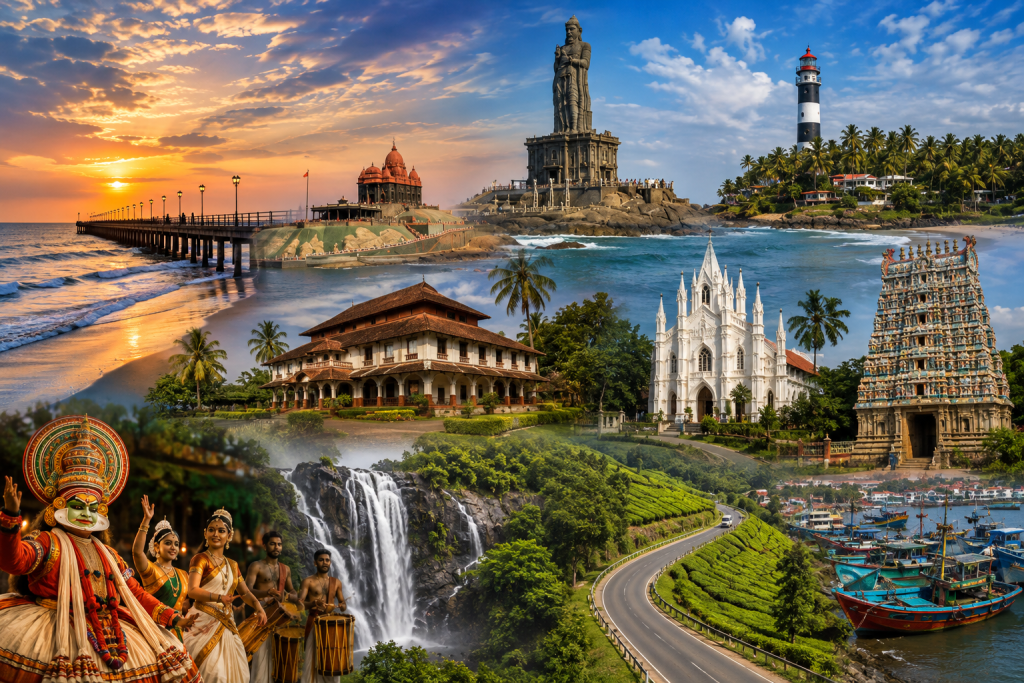
Kozhikode, also known as Calicut, is a historic coastal district in northern Kerala. It is renowned for its rich maritime history, spice trade, cultural heritage, beautiful beaches, greenery, and strong traditions. The district headquarters is Kozhikode city.Kozhikode lies between the Arabian Sea and the Western Ghats. It shares boundaries with Kannur to the north, Wayanad to the east, and Malappuram to the south. Its landscape consists of three major regions: the sandy coastal belt, lateritic midlands, and the rocky highlands of the Western Ghats.Kozhikode was once the capital of the powerful Zamorins (Samoothiris) and an important international centre for spice trading. Arab, Chinese and European traders were attracted to its port and commercial importance. In 1498, Vasco da Gama arrived at Kappad, marking a major moment in the history of European maritime contact with India. The district is therefore closely associated with the historic spice route and Malabar’s trading heritage.
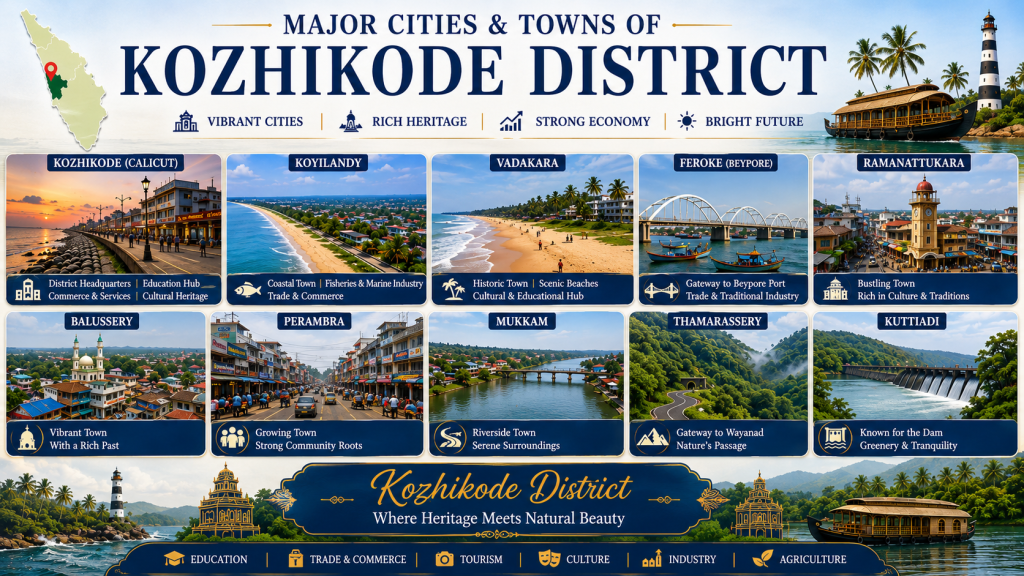
Major Cities & Towns Of Kozhikode District
Kozhikode District has several important cities and towns that serve as administrative, commercial, educational, transport, and cultural centers. Kozhikode, also known as Calicut, is the district headquarters and the largest urban center. Vadakara and Koyilandy are major coastal towns known for trade, transport, and historic significance, while Feroke, Payyoli, Ramanattukara, Koduvally, and Mukkam are important municipalities and growing regional centers. Other notable towns include Beypore, famous for its maritime heritage and traditional shipbuilding; Thamarassery, a gateway to Wayanad; Kunnamangalam, Mavoor, Perambra, Balussery, Thiruvambady, and Nadapuram, which support local commerce, education, agriculture, and public services. The district also includes several developing urban and semi-urban settlements such as Olavanna, Kakkodi, Atholi, Cheruvannur, Ramanattukara, and Meppayyur.
Population and Ratio of Gendrer of Kozhikode district
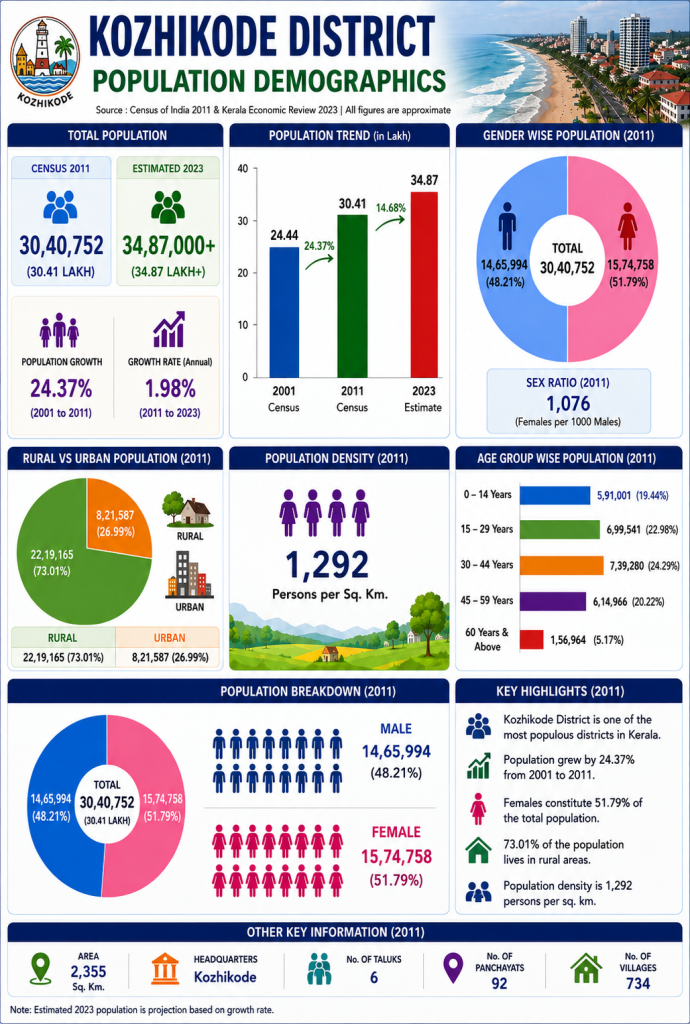
Kozhikode District is one of the major districts of Kerala, located along the Malabar Coast in the northern part of the state. It is known for its historic importance, coastal geography, commercial activity, and strong social indicators. Kozhikode city, also known as Calicut, serves as the district headquarters and is an important urban center in Kerala. The district has a rich cultural background, with a mix of coastal, urban, and hilly regions that support trade, tourism, education, and services.
According to the 2011 Census, Kozhikode District had a population of about 30.86 lakh (3,086,293) people. By 2026, the population is estimated to be higher, reflecting steady growth over the years. The district has a well-balanced demographic structure, with around 67 percent of the population living in urban areas and the remaining in rural regions. This makes Kozhikode one of the more urbanized districts in Kerala.
Kozhikode is also known for its excellent literacy rate, which stands at about 95.08 percent, placing it among the better-performing districts in India. The sex ratio is around 1,098 females for every 1,000 males, which is favorable and above the national average. The district also shows a high population density of roughly 1,316 persons per square kilometer, indicating a fairly crowded and developed settlement pattern.The economy of Kozhikode is diverse and supported by commerce, small-scale industries, fisheries, agriculture, and tourism. Coconut cultivation, spice trade, fishing, and service-sector activity are important parts of local livelihood. The district’s coastline, historical landmarks, markets, and educational institutions make it a significant center for both economic and cultural activity.Kozhikode’s demographic profile reflects a socially advanced district with strong education, urban growth, and a balanced population structure. Its combination of historical importance, coastal trade, and modern development makes it one of the most prominent districts in Kerala.
District Statistics & Measurements Of Kozhikode district
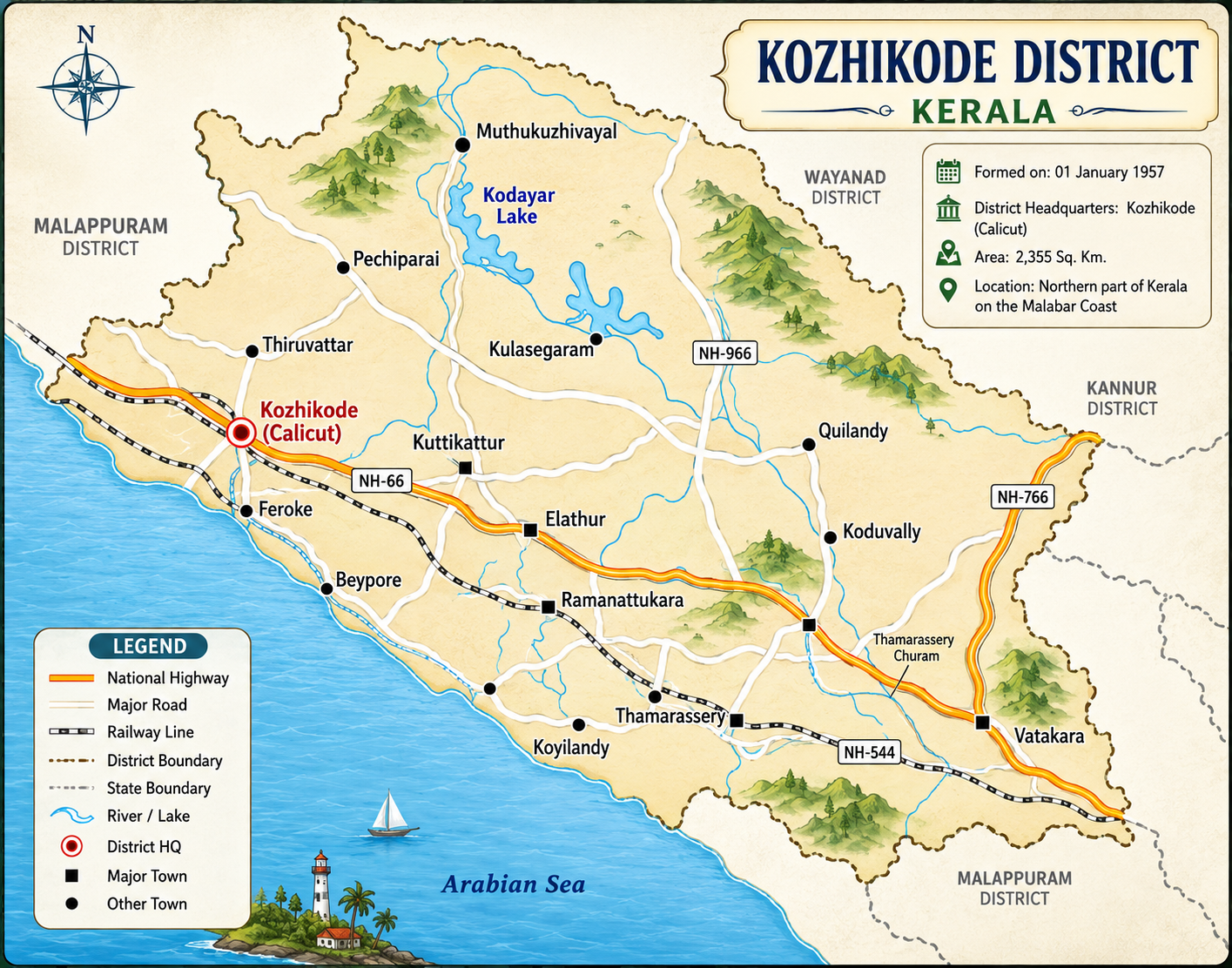
Kozhikode District is one of the major districts in Kerala, located along the Malabar Coast in the northern part of the state. It is known for its strong urban growth, historic trading background, high literacy, and important role in education, commerce, and services. The district headquarters is Kozhikode city, also called Calicut, and it serves as the main administrative and commercial center.According to the 2011 Census, Kozhikode District covers an area of about 2,345 square kilometers and had a population of 30,86,293 people. The district had 14,70,942 males and 16,15,351 females, giving it a sex ratio of 1,098 females per 1,000 males. Its population density was around 1,316 persons per square kilometer, which shows that it is one of the more densely populated districts in Kerala.The district has a literacy rate of 95.08 percent, with male literacy at 97.42 percent and female literacy at 92.99 percent. This indicates a highly educated population and strong social development. Kozhikode also has a large urban presence, with 1 revenue division, 1 corporation, 7 municipalities, 4 taluks, 12 blocks, 70 panchayats, and 118 villages.Administratively, Kozhikode is divided into the taluks of Kozhikode, Koyilandy, and Vadakara in many official references, while some newer district sources list 4 taluks in total.
Historical Background of Kozhikode District
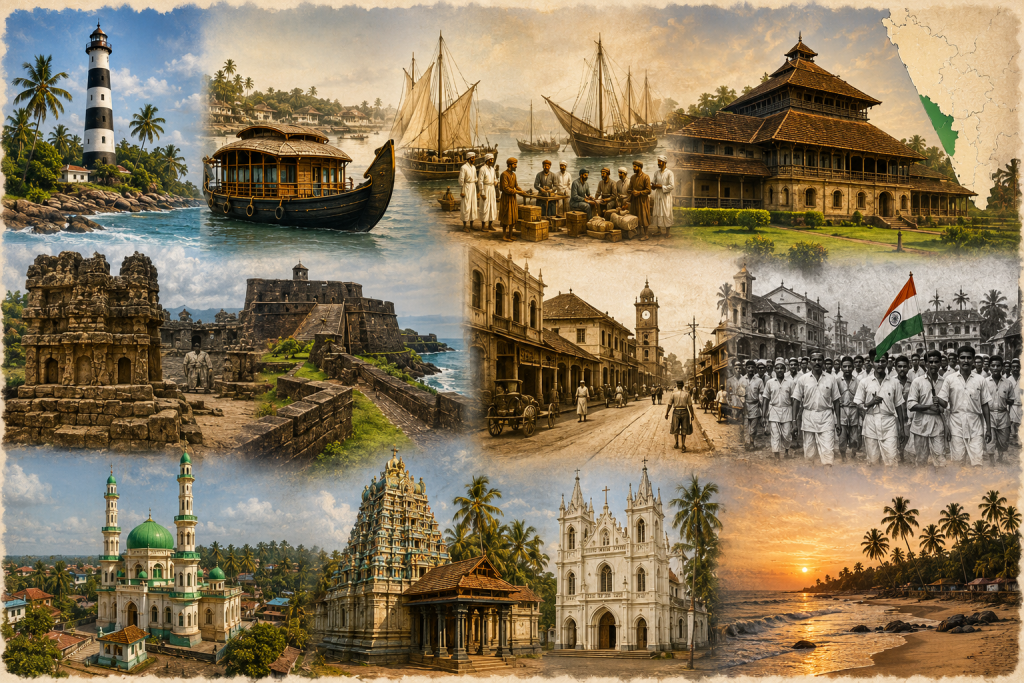
Kozhikode District has a long and distinguished history that goes back many centuries. In ancient and medieval times, Kozhikode, also known as Calicut, rose to prominence as a major spice-trade port on the Malabar Coast, attracting Arab, Chinese, and later European merchants. Its strategic coastal location made it one of the most important commercial centers in South India and gave it the title “City of Spices.”During the medieval period, the region was ruled by the powerful Zamorin dynasty, under whom Kozhikode became a flourishing center of trade, culture, and maritime exchange. Merchants from across the Indian Ocean came to the port to trade in pepper, cardamom, and other valuable goods, helping the city gain international importance.A major turning point in its history came in 1498, when Portuguese explorer Vasco da Gama landed at Kappad near Kozhikode, opening a new sea route between Europe and India. This event brought Kozhikode into the wider world history of exploration, trade, and colonial competition.Over the following centuries, the district came under the influence of the Portuguese, Dutch, Mysore rulers, and the British, each leaving an impact on the region’s political and social life. Kozhikode also played a role in India’s freedom struggle and continued to remain a major cultural and commercial center.
Revenue and Economy of Kozhikode District
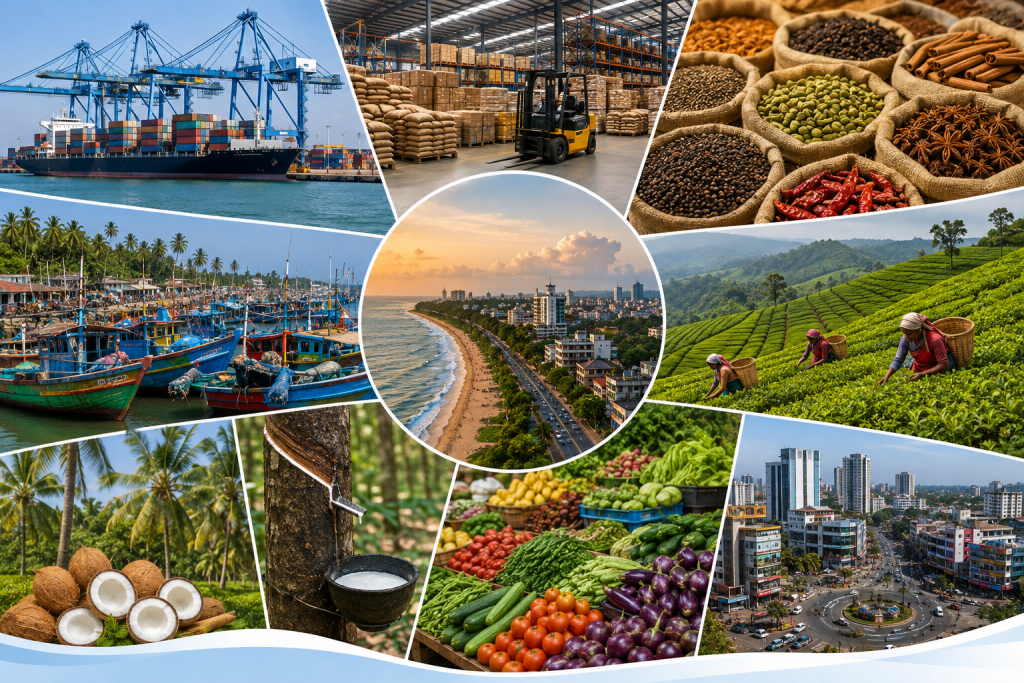
Kozhikode District has a strong and diversified economy shaped by agriculture, trade, services, and small-scale industry. Kozhikode city functions as the major commercial hub of North Kerala, supported by road, rail, and air connectivity, while the district also has long-standing timber trade activity along the Kallayi River.Agriculture continues to be a major source of income for many people in the district. Important crops include banana, coconut, paddy, pepper, ginger, turmeric, cashew, rubber, tapioca, arecanut, and other plantation and food crops.The district is not heavily industrialised, but it has small-scale industries, trade networks, fisheries, and port-linked activity that contribute to local livelihoods. The intermediate port at Kozhikode and the minor port at Vadakara also support business activity in the district.From a revenue and administration perspective, Kozhikode district is organized into revenue divisions, taluks, and revenue villages, with the district administration handling land, tax, and governance functions. A district-level economic source notes that Kozhikode, with about 8% of Kerala’s population, contributes around 12% of the state’s income, showing its importance in the state economy.