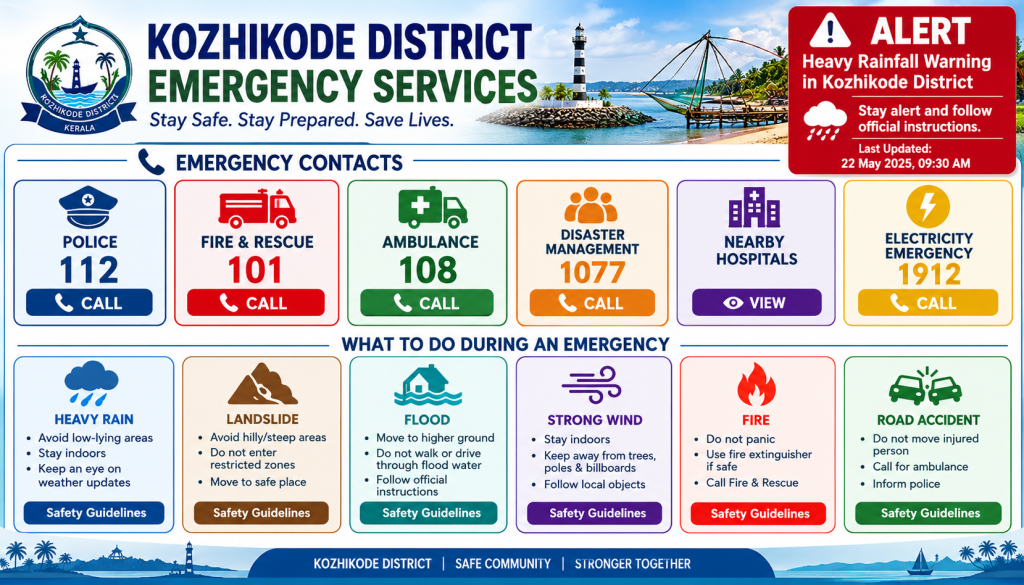
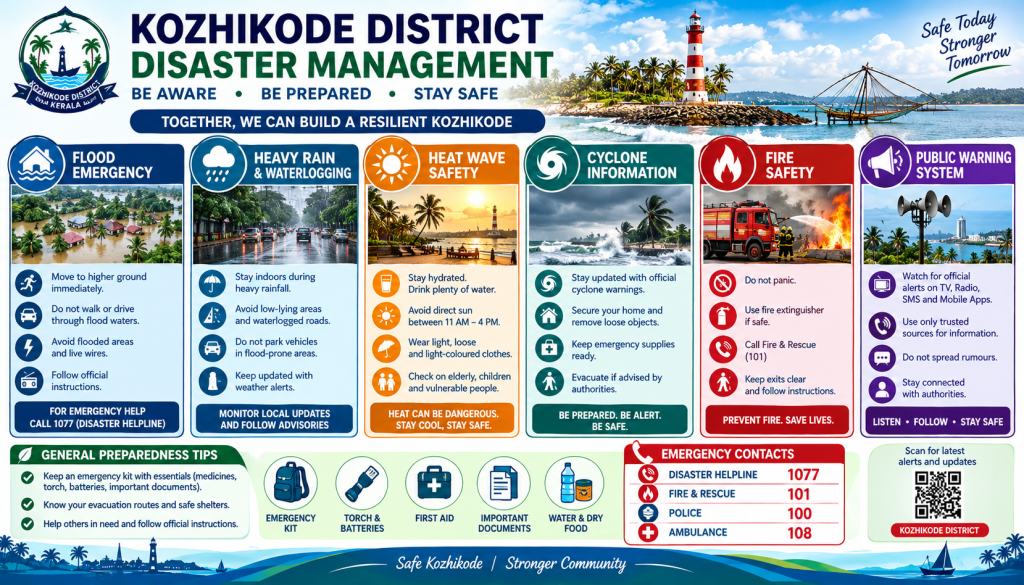
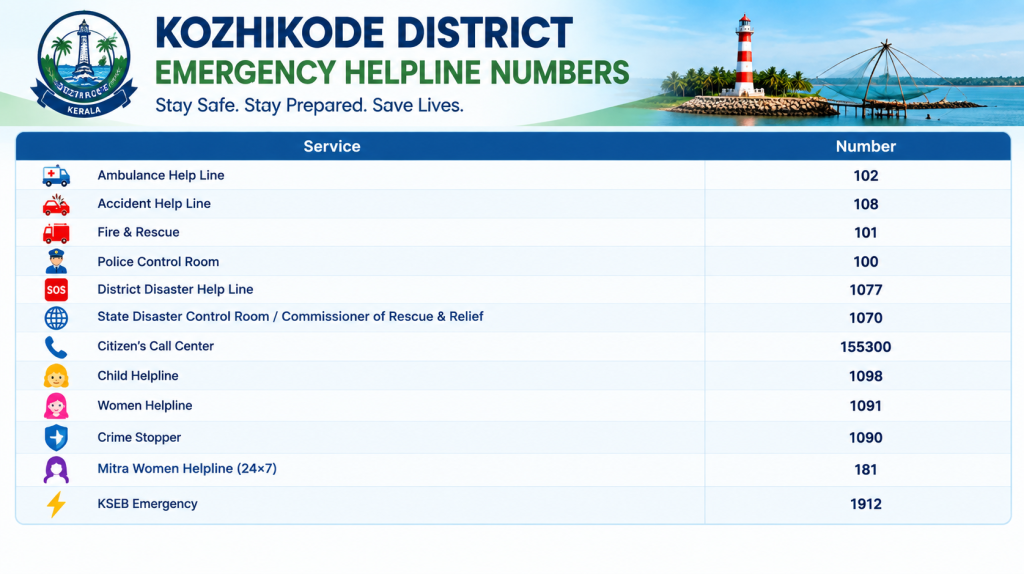
The Emergency Services section provides quick access to essential emergency contacts, disaster preparedness information, weather alerts, and public safety guidelines. Citizens and visitors can use this page to stay informed and respond effectively during emergencies.
🚑 Medical Emergency
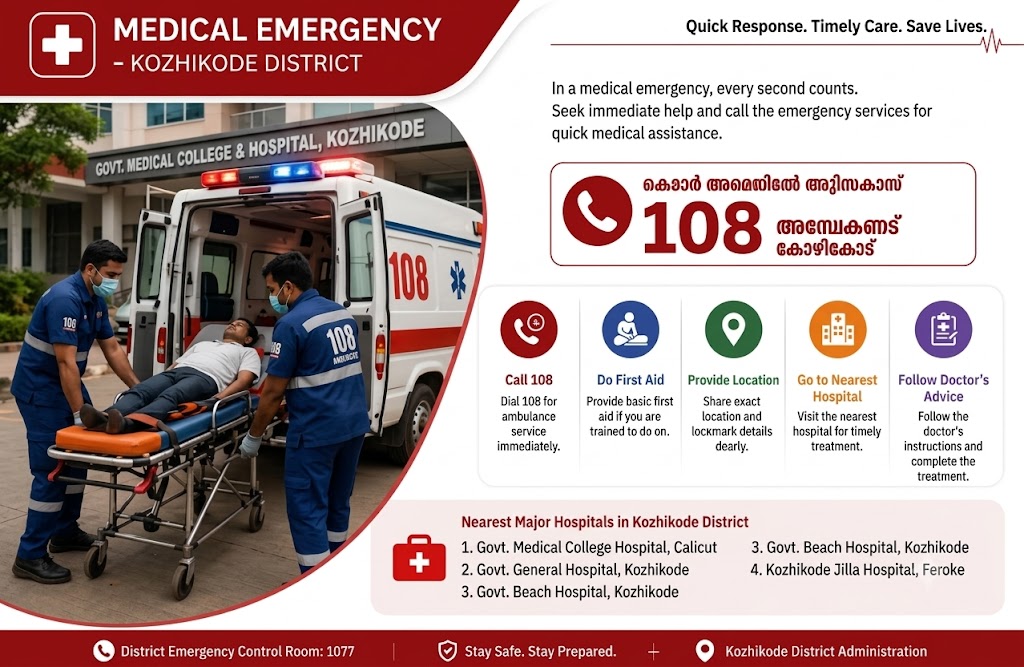
In a medical emergency, call 108 Ambulance immediately. Provide first aid only if you are trained, remain calm, and help emergency responders reach the patient quickly.
🚗 Road Safety
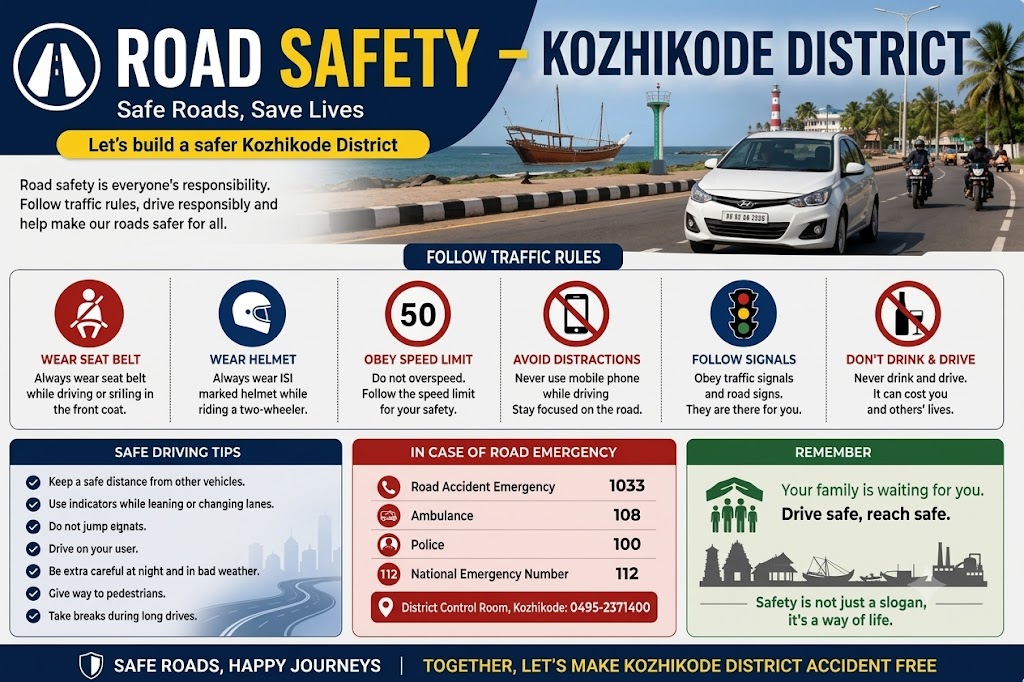
Always wear a helmet or seat belt, obey traffic signals, avoid speeding, and never use your phone while driving. don’t drink and drive, Safe driving saves lives and reduces accidents.
🔥 Fire Safety
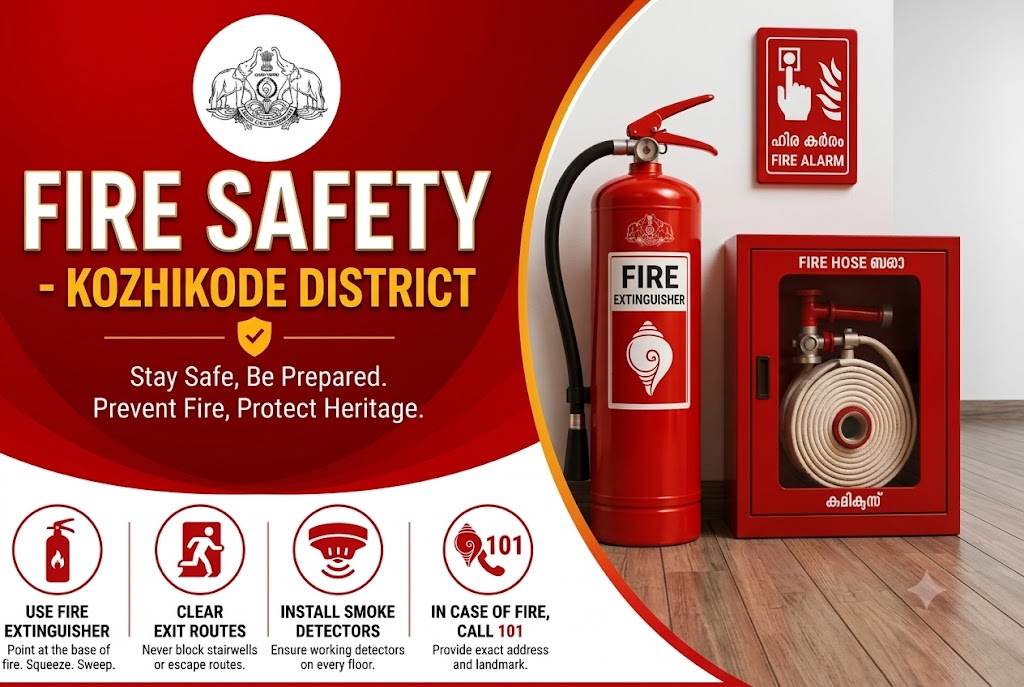
Keep fire exits clear, avoid overloading electrical sockets, and install smoke detectors. In case of fire, evacuate immediately and call the Fire & Rescue Service.
🌪 Cyclone & Storm Safety
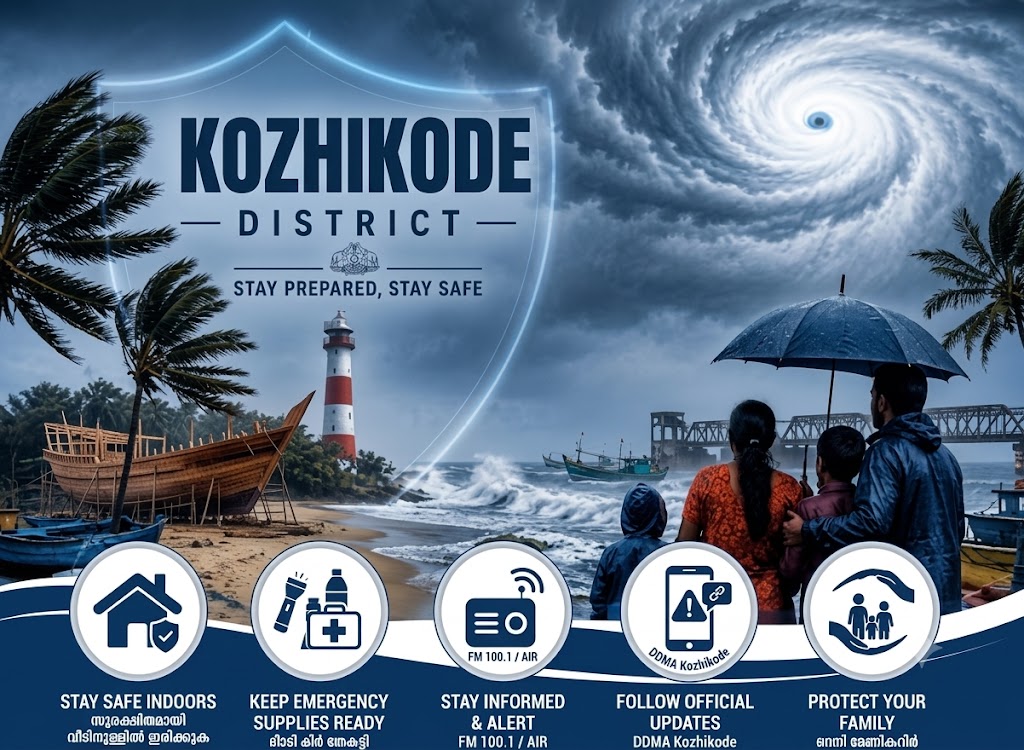
Stay indoors during severe weather, secure loose objects, keep emergency supplies ready, and follow weather advisories and evacuation instructions.
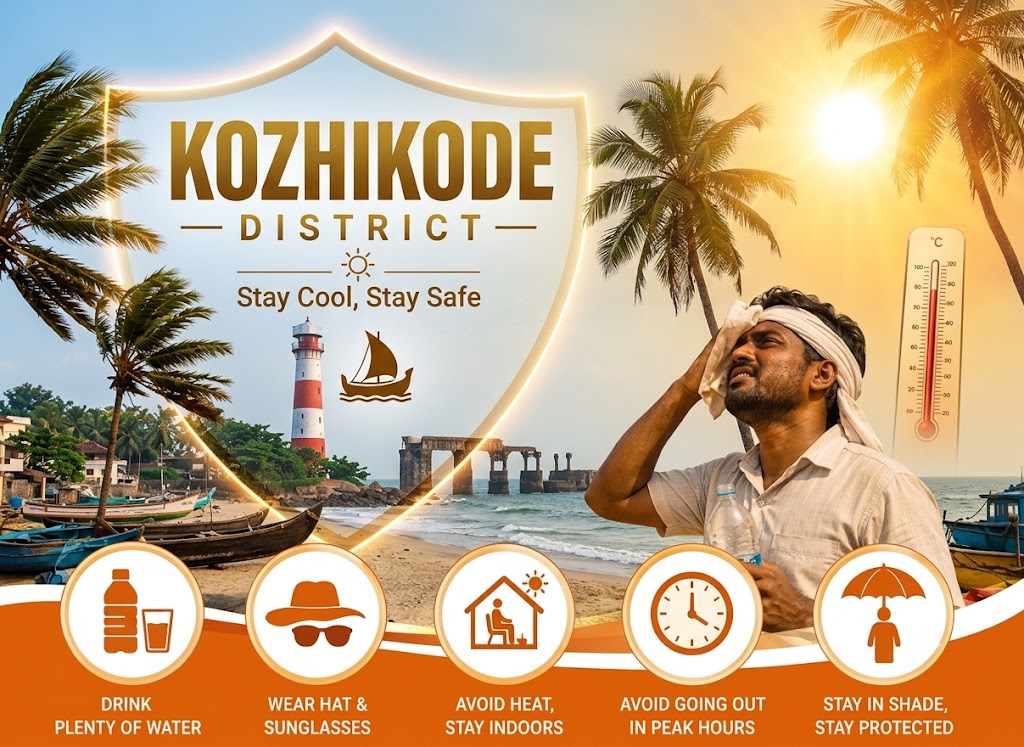
🌡 Heat Wave Safety
Drink plenty of water, stay in shaded or cool areas, avoid outdoor activities during peak afternoon hours, and watch for signs of heat exhaustion.
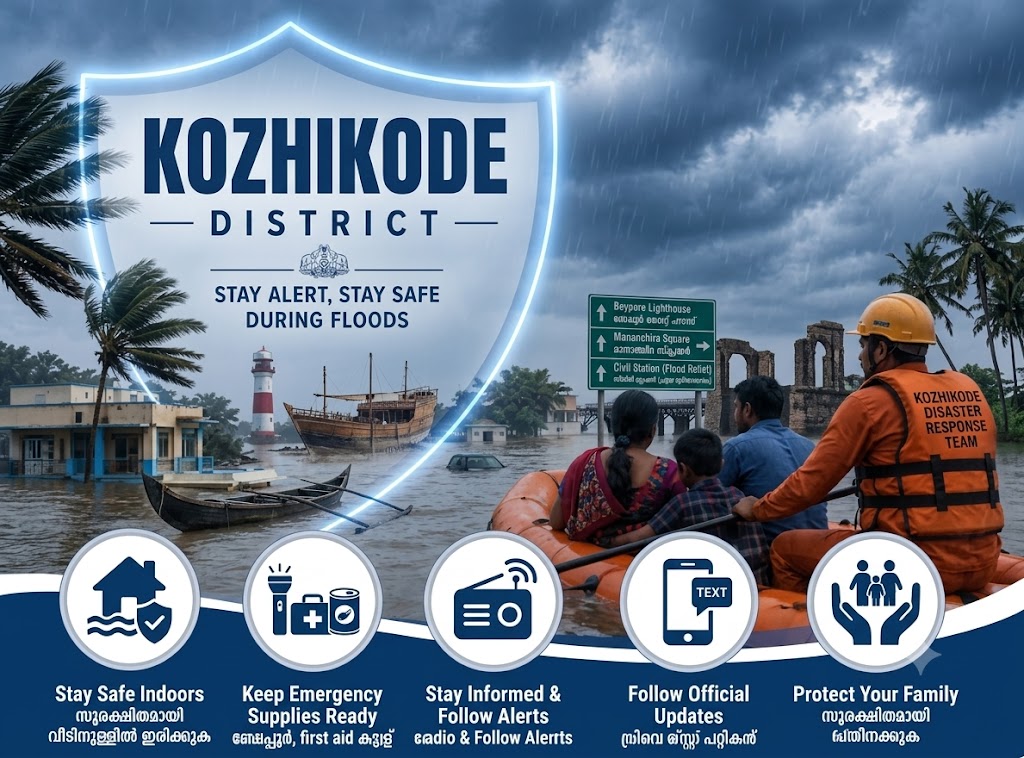
🌊 Flood Safety
Move to higher ground during floods, avoid walking or driving through floodwater, switch off electricity if safe to do so, and follow local emergency alerts.
Emergency Alerts
🌪️ Disaster Management – Kozhikode District
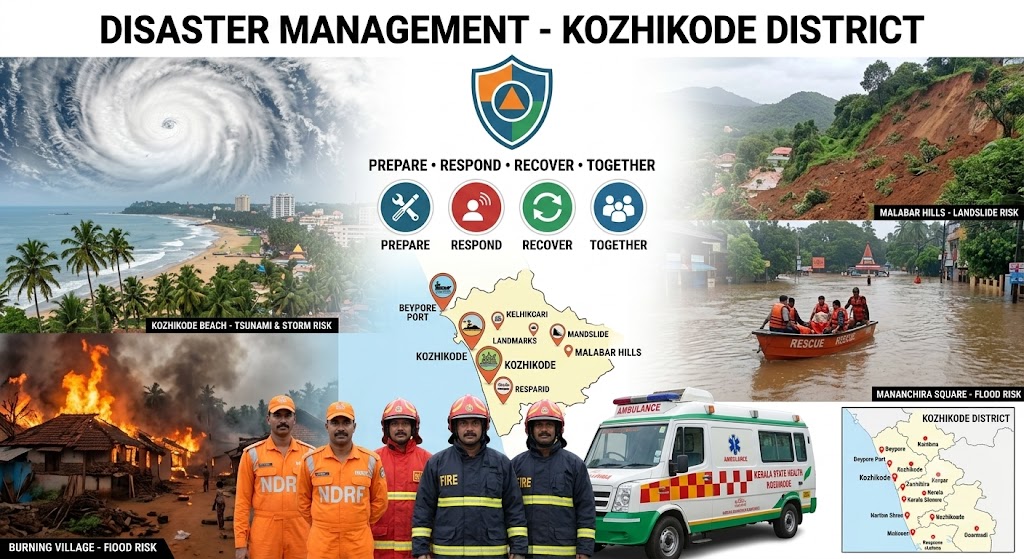
Kozhikode District is committed to ensuring the safety and well-being of its residents through a comprehensive disaster management system coordinated by the District Disaster Management Authority (DDMA). With its extensive coastline, hilly regions, rivers, and densely populated areas, the district is vulnerable to natural disasters such as cyclones, heavy rainfall, floods, landslides, coastal erosion, storm surges, heat waves, and occasional tsunami threats.The district administration focuses on disaster preparedness through early warning systems, public awareness campaigns, evacuation planning, emergency shelters, and coordinated response mechanisms involving the Police, Fire & Rescue Services, Health Department, Coast Guard, local self-government institutions, and other emergency agencies. Special attention is given to vulnerable coastal and hilly areas during periods of heavy rainfall and extreme weather conditions.Regular mock drills, community awareness programmes, emergency response training, and continuous monitoring of weather and river conditions help strengthen disaster resilience across the district. Citizens are encouraged to stay informed through official advisories, maintain essential emergency supplies, avoid risk-prone areas during severe weather, and follow safety instructions issued by the authorities.